If politics is optics, then diplomacy is reputation management on a global scale. That is why ambassadorial nominations are usually treated as a country’s soft-power audition, a moment to project credibility, competence, and coherence to the world.
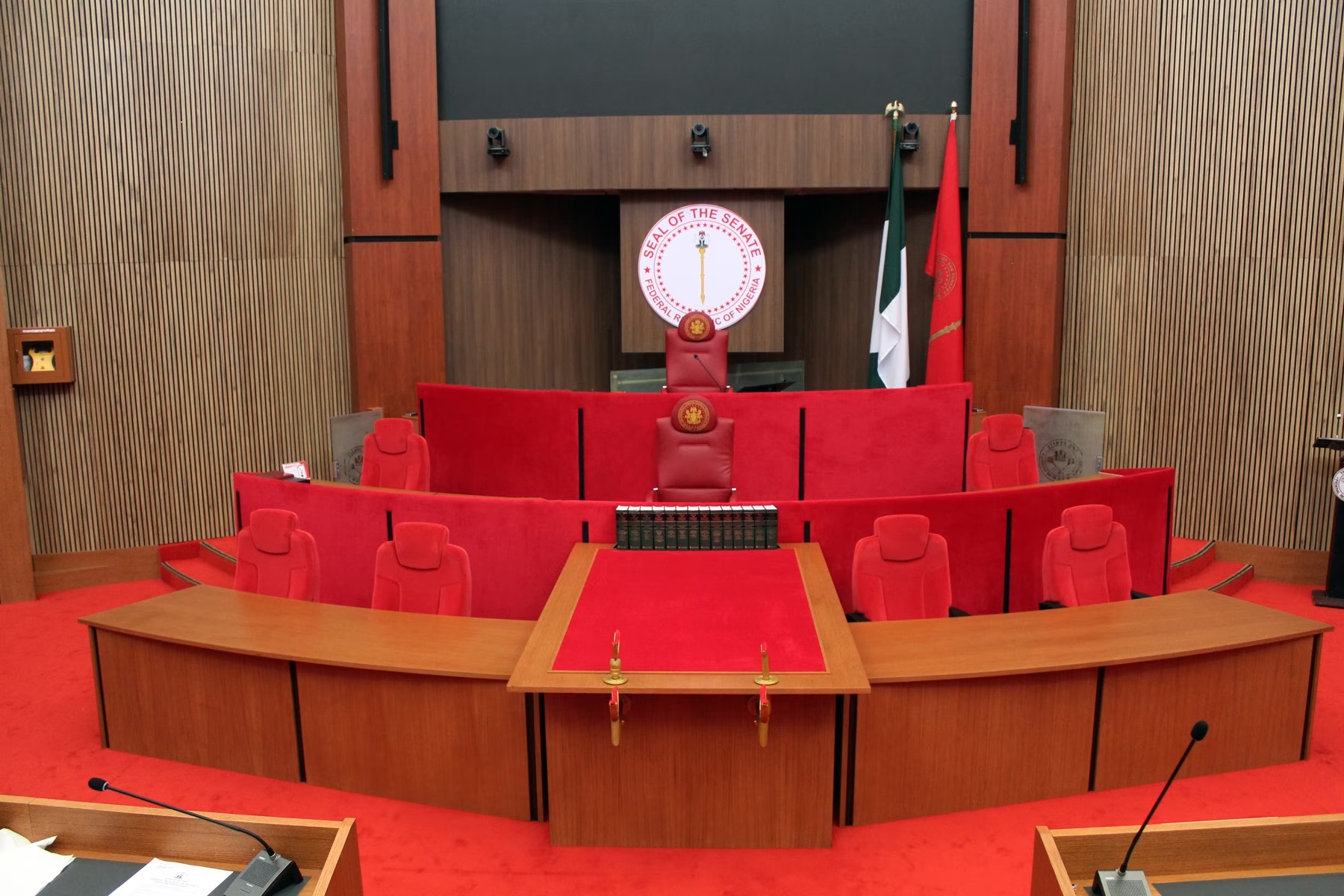
Last week, however, Nigeria’s Senate appeared to reduce that audition to a speed-run. President Bola Tinubu’s list of ambassadorial nominees, already controversial before it reached the Red Chamber, sailed through confirmation in what many observers have described as a “bow-and-go” spectacle. No sustained interrogation. No probing of records. No public reassurance that Nigeria’s interests, not political debts, were the central consideration.
The concern both procedural and structural.
Among the confirmed nominees are names that dominate Nigeria’s political discourse not for diplomatic achievements but for controversy: outspoken political operators, former public officials with unresolved questions around governance, electoral credibility, or inflammatory rhetoric, and even spouses of former governors whose public profiles are thin beyond proximity to power. In a domestic political environment, these figures may be familiar. In a diplomatic context, familiarity is irrelevant. What matters is acceptability to every party involved, from host countries to international institutions, and foreign publics.
Under international diplomatic practice, an ambassador-designate must receive agrément, that is, a formal approval from the receiving state before deployment. So these questionable characters passing senate screening doesn’t make their appointment and posting automatic. Countries reserve the right to reject nominees quietly, without explanation, especially where a candidate’s antecedents clash with their values, laws, or strategic interests. This is where Nigeria’s Senate may have committed a serious aberration: confirming nominees without publicly stress-testing their suitability for international representation exposes the country to reputational embarrassment if any are declined.
Several of the nominees have extensive digital footprints, which is a factor modern diplomacy cannot ignore. Statements made on social media, televised commentary, partisan attacks, and records of political agitation do not disappear at the gates of foreign ministries. They are searchable, archived, and often scrutinised more closely than official CVs. In some jurisdictions, past comments perceived as inflammatory, discriminatory, or hostile to democratic norms can trigger red flags during background checks. The Senate’s failure to interrogate these realities suggests a disconnect between Nigeria’s legislative processes and contemporary diplomatic standards.
There is also the issue of credibility. Diplomats are expected to advocate persuasively for their home countries on issues ranging from investment to security cooperation. That advocacy relies heavily on personal legitimacy. When a nominee is widely perceived, home and abroad, as a political enforcer, a propaganda figure, or a beneficiary of patronage, their ability to build trust is compromised. Host governments may engage them formally while limiting substantive cooperation behind closed doors. The cost of this is invisible but real: lost goodwill, stalled negotiations, and diminished influence, if any at all.
The Senate’s role in ambassadorial confirmation is not ceremonial. It is meant to function as a quality-control mechanism, a constitutional checkpoint that balances executive discretion with national interest. Historically, confirmation hearings serve three purposes: to assess competence, to surface potential conflicts, and to reassure the public that appointments are merit-based.
By opting for a largely symbolic screening, the Senate effectively abdicated this responsibility. In doing so, it sent an unfortunate signal: that diplomatic postings are extensions of domestic political reward systems rather than strategic national assignments.
Another overlooked dimension is reciprocity. Nigeria is participating in a global diplomatic ecosystem governed by mutual expectations. When Nigeria accepts ambassadors from other countries, it often evaluates their professionalism, experience, and public records. Failing to apply similar rigor internally weakens Nigeria’s moral authority to demand high standards from others. Diplomacy thrives on symmetry.
Supporters of the confirmation process may argue that ambassadors ultimately take instructions from the presidency and the foreign ministry, not from personal ideology. While structurally true, this argument underestimates the autonomy ambassadors exercise in shaping narratives, managing crises, and interpreting policy in real time. Diplomacy is judgment-driven, not a script-reading exercise. When judgment is clouded by partisanship or past controversies, the margin for error widens.
There is also the domestic consequence. Public confidence in institutions erodes when oversight appears performative. The outrage surrounding the confirmation was not only about who was nominated, but how casually the process unfolded. In an era where Nigerians are increasingly aware of global standards, and compare their institutions accordingly, such moments deepen cynicism about governance and accountability.
Ultimately, the question is not whether controversial figures can reinvent themselves as diplomats. People evolve. The question is whether Nigeria, as a state, can afford to gamble its international image on untested assumptions. Ambassadorial postings are high-stakes representations of national identity, and the Senate seems not to share the same view.
If any of these nominees are rejected by host countries, the fallout will not be personal, it will be national. Quiet diplomatic refusals still echo loudly in policy circles.
The Senate had an opportunity to pre-empt that risk through rigorous scrutiny. By choosing speed, ‘rubber-stampism’, and partisanship over substance, it may have traded short-term political convenience for long-term diplomatic cost.
In global affairs, perception is policy. Nigeria’s Senate just shaped a perception, and the world is watching.
Your opinion matters, please leave a comment