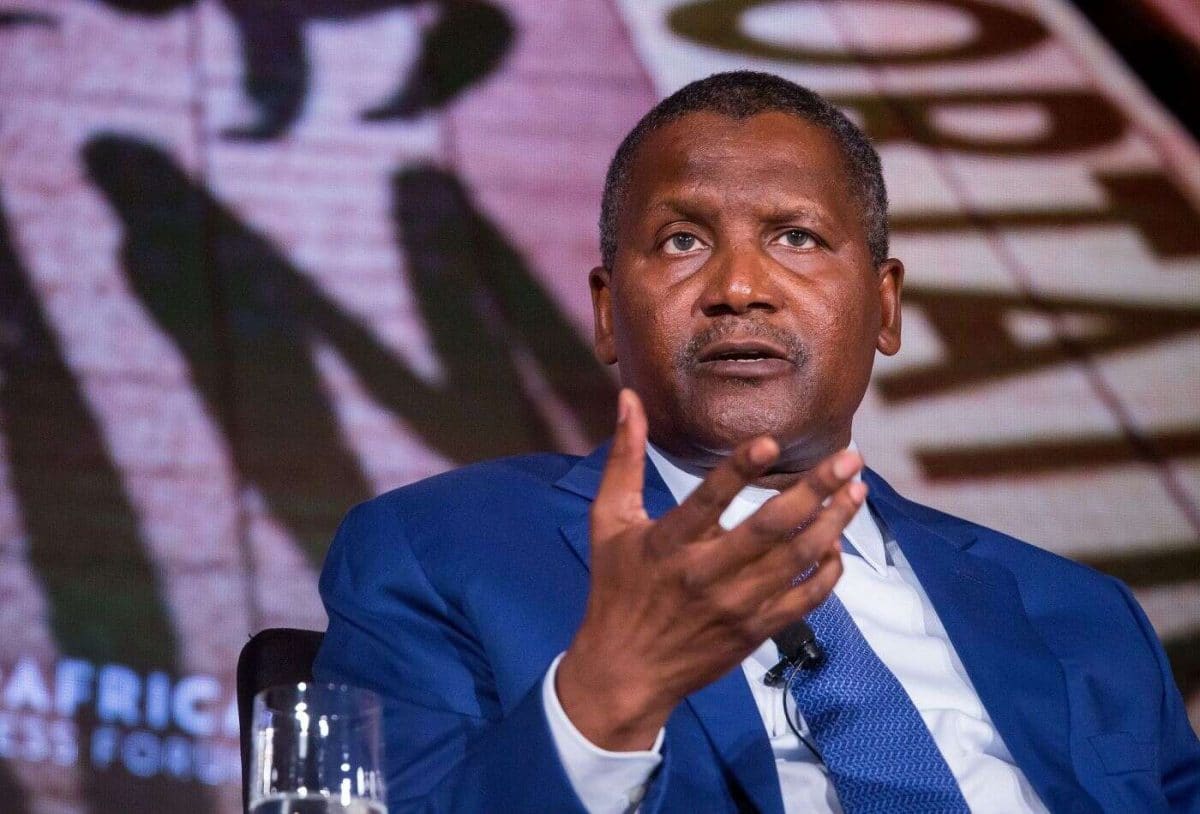
So here’s the gist, Aliko Dangote — yes, that same Dangote — publicly called out Farouk Ahmed, CEO of the Nigerian Midstream and Downstream Petroleum Regulatory Authority (NMDPRA), accusing him of corruption and living far beyond what his public servant pay check should allow.
Dangote claims the NMDPRA guy spent $5 million on secondary school fees in Switzerland for his four children, that’s about ₦7.5 billion over six years. Ordinary Nigerians are struggling to afford ₦100,000 per term in his home state of Sokoto, yet this regulator allegedly drops billions just on schooling?
Dangote wants a full corruption probe, not just smoke and mirrors. He has even promised to do the expose if Ahmed denies the allegation.
But this beef is much deeper than school fees. Dangote also says NMDPRA has been handing out reckless import licences for petrol, undermining local refineries, including his own giant Dangote Refinery, and keeping Nigeria dependent on foreign fuel. He calls it economic sabotage, and the issue has blown up into public debate over who’s protecting whose interests.
Let’s unpack this small small.
What Is Really Dangote Saying
At the core of Dangote’s outrage are three claims:
- Farouk’s lifestyle doesn’t match his official earnings. How does a public official afford billions when public servants in Nigeria struggle just to pay school fees for one child, especially if you consider the wages of civil servants? That’s the question.
- Regulatory capture: Dangote alleges that instead of protecting Nigerian refining capacity, NMDPRA is issuing licence after licence for cheap imports and profiting a few while killing the local refining industry.
- Conflict of interest: Dangote frames this as a national problem, not a personal vendetta. He says he wants investigation, accountability, and transparency.
Whether you’re Team Dangote or Team Farouk, the questions raised are Why do public officials appear to live like billionaires? Where does that money come from? Who benefits from policy decisions?
Nigeria’s Corruption Culture is Not Just Oil and Gas
Here’s the uncomfortable truth: this allegation is NOT an isolated issue, but is symptomatic of a systemic culture where living above means has become normal.
Fraud & Quick Money Mentality
Decades of economic hardship and limited opportunity have made quick money hustles like internet fraud and cyber scams seem like viable pathways to wealth. We’ve seen the rise of celebrities who flaunt luxury lifestyles, private jets, expensive cars, overseas vacations, all funded by ill-gotten gains. They become role models for some youths, not cautionary tales.
Money Laundering Aesthetic
From Instagram stars posting Lambo pics to influencers in Dubai clubs, there’s this obsession with wealth symbols over wealth earned by enterprise.
This is exactly the kind of culture where a public official allegedly paying billions for kids’ school fees abroad raises eyebrows. Not because it’s lavish, but because it raises real questions about source and accountability.
Living Above Means: A Nigerian Reality
In Nigeria today, wealth is too often measured by accessories, not achievement.
We have actors flashing exotic trips while their movies struggle at the box office, Instagram celebs driving flashy cars without clear business revenue streams, politicians and regulators with lifestyles that match no declared salary scale. It’s everywhere all around.
This is the exact pattern that breeds systemic corruption — where the appearance of wealth matters more than the source of wealth.
You see it in fuel import licences, government contracts, visa rackets, and international schooling bills. If money doesn’t show up on legitimate enterprise, it shows up in suspicious lifestyle choices.
Why This Matter Goes Beyond Dangote & Farouk
This isn’t just a billionaire vs. bureaucrat fight, but a national reflection of who we really are as a people.
If a regulator is genuinely corrupt, Nigerians deserve accountability. If he isn’t, Nigerians deserve transparency and closure so that public trust isn’t eroded.
This story taps into a much bigger Nigerian headache which is the disconnect between wealth and productivity.
We see brilliance wasted on quick money because doing business legitimately feels harder than exploiting loopholes. We celebrate flashy lifestyles more than sustainable impact. And the cycle repeats itself.
The Bigger Pattern: Wealth Without Enterprise
Nigeria’s problem isn’t just corruption, but how it feels normalized
A civil servant’s children in Swiss schools should raise suspicion because we know that’s not feasible on government salaries. But no one says anything, because na normal level.
Celebrities and influencers flaunting wealth with no clear business model feeds a culture of covet rather than create.
This creates a feedback loop where: Corruption is normalized → Youth emulate “fast money” → Economic foundations weaken → Governance fails → Corruption deepens.
Final Word: Let’s Be Real About Accountability
If Nigeria is going to break this cycle, the Dangote vs. NMDPRA scandal should be more than a Twitter trending topic. It should spark real forensic audit of public wealth, transparent income declarations, public education around enterprise and it’s relationship with wealth creation, and less glamorizing wealth without visible enterprise
Corruption isn’t just about stealing money; it’s also about the culture that silently accepts it and legitimizes it.
In the coming year, Nigeria deserves better.
Your opinion matters, please leave a comment