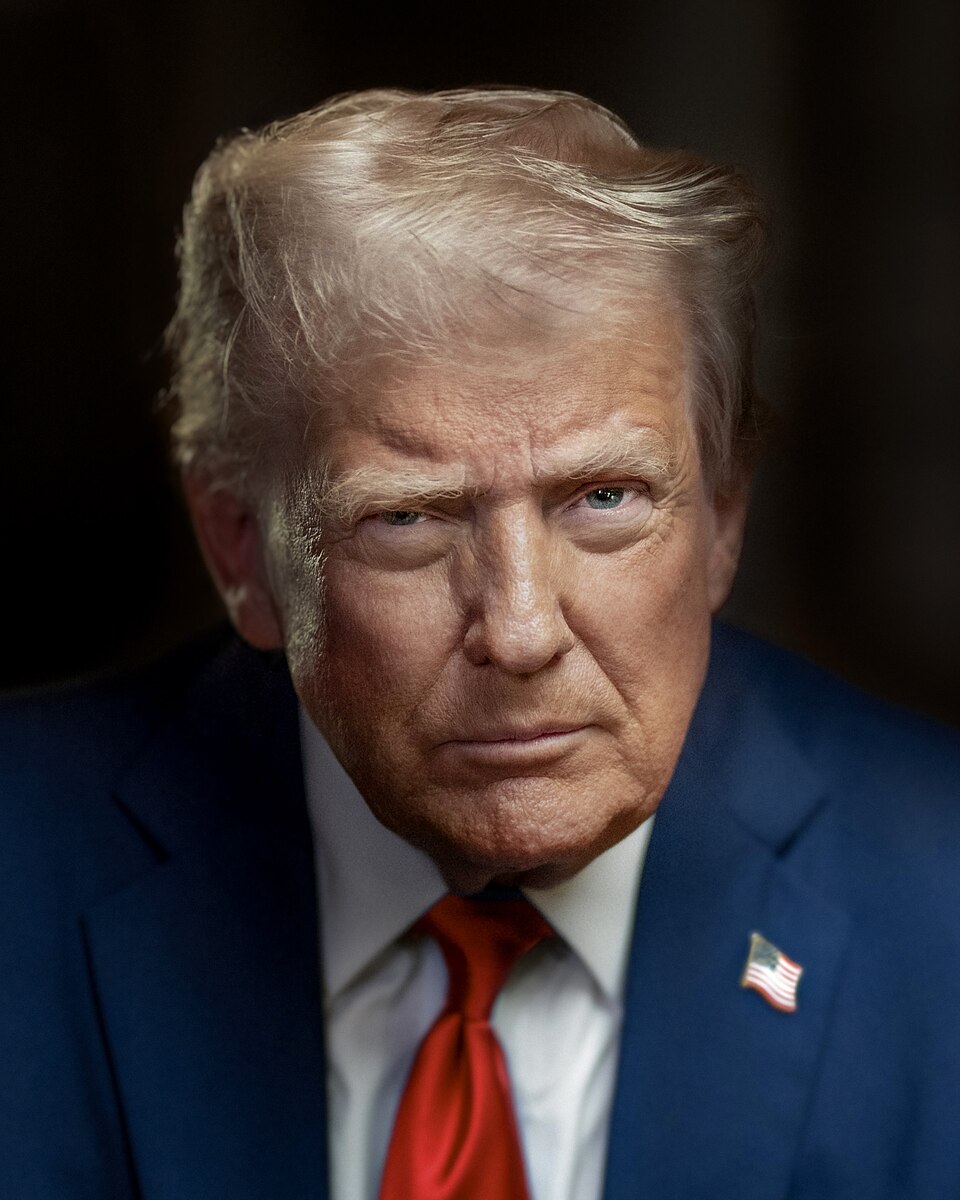
On Christmas Day, while much of the world was distracted by festivities and holiday politics, the United States quietly but forcefully inserted itself into Nigeria’s security crisis. President Donald Trump announced that U.S. forces had carried out airstrikes on what he described as “terrorist locations” in Sokoto State, in Nigeria’s northwest. According to Trump, the targets were Islamic State-linked fighters who had been “viciously killing, primarily, innocent Christians.”
The announcement landed like a thunderclap. Not just because foreign airstrikes on Nigerian soil are rare, but because of the framing. The strikes came weeks after the U.S. designated Nigeria a “Country of Particular Concern” over allegations of Christian persecution. In one move, Nigeria found itself at the intersection of counterterrorism, religious politics, global optics, and questions of sovereignty.
Almost instantly, the arguments began. Did Nigeria ask for the strikes or simply acquiesce to a decision already made in Washington? Were the attacks genuinely about protecting Christians, or was that narrative a convenient political cover? And most importantly, why Sokoto?
To understand what really happened, it helps to strip away the headlines, and follow the story chronologically, carefully, and without sentiment.
The American Case
From Washington’s perspective, the justification was straightforward. The U.S. Africa Command (AFRICOM) stated that it had conducted precision strikes against Islamic State targets operating in northwest Nigeria. Initial statements suggested the operation was carried out “at the request of the Nigerian government,” implying a cooperative security effort between both countries.
President Trump went further, explicitly tying the operation to the alleged killing of Christians in Nigeria. His rhetoric was familiar: muscular, moralistic, and unapologetically blunt. In framing the strikes as a defense of persecuted Christians, Trump was speaking to both an international audience and a domestic political base that has long been sensitive to claims of religious persecution abroad.
But soon after AFRICOM’s first statement circulated online, observers noticed something unusual. Later versions of the statement appeared to downplay or remove explicit references to Nigeria requesting the strikes, instead emphasizing that the action was taken “at the direction of President Trump.” That subtle change triggered speculation, especially on Nigerian social media, about how much agency Abuja really had in the decision.
Was this a joint operation? Or was Nigeria simply informed about a decision unilaterally taken by Uncle Sam?
Nigeria’s Response
Nigeria’s official reaction was measured and deliberate. The federal government confirmed that there is ongoing security cooperation with the United States, including intelligence sharing and counter-terrorism support. Nonetheless, Nigerian officials were careful not to endorse the “Christian genocide” framing that dominated American headlines.
From Abuja’s standpoint, Nigeria’s security crisis is complex and multi-layered. Terrorism, banditry, insurgency, and communal violence affect Christians and Muslims alike, depending on geography. The government’s consistent position has been that while religious identity sometimes overlaps with violence, Nigeria is not experiencing a centrally coordinated religious extermination campaign.
In other words, Nigeria accepted the need for broader counter-terrorism cooperation, but rejected the ideological packaging that came with it.
That distinction matters. Accepting military assistance is one thing. Accepting an international narrative that paints the country as either complicit in genocide or incapable of protecting a specific religious group is another.
Who Really Made the Call?
This is where interpretations diverge.
One school of thought argues that the United States acted unilaterally. According to this view, Washington identified a threat, decided to act, and informed Nigerian authorities as a courtesy rather than a request. Nigeria, facing its own security limitations and not wanting a global geopolitical standoff, simply allowed the operation to proceed.
Another camp believes Nigeria was more involved than critics admit. Reports suggest Nigerian security agencies provided intelligence on ISIS-linked cells operating in the northwest, including the Lakurawa faction that has reportedly pledged allegiance to the Islamic State. From this angle, Nigeria was not a passive observer but a quiet partner, allowing the U.S. to execute what local forces could not.
The most plausible explanation lies somewhere in between. The decision to strike was likely American. The permission to strike, however, was Nigerian. Final authority rested in Washington, but Abuja’s consent, whether enthusiastic or pragmatic, was part of the equation.
That dynamic is not unusual in international security partnerships, especially when one partner controls superior surveillance and strike capabilities.
The Sokoto Question
If this operation was about protecting Christians, the choice of Sokoto raises serious questions.
Sokoto is one of Nigeria’s most religiously homogeneous states, with an overwhelmingly Muslim population. It is not a hot-spot for Christian-targeted violence, nor is it where the most widely reported massacres of Christian communities have occurred.
Those incidents have largely been concentrated in the Middle Belt, in states like Plateau and Benue, where long-running conflicts between farming and herding communities have taken on religious and ethnic dimensions. The northeast, particularly Borno State, has endured over a decade of Islamist insurgency, with Boko Haram and ISWAP targeting civilians indiscriminately.
If the primary objective were to stop the killing of Christians, logic suggests those regions would have been the focal point.
Instead, Sokoto points to a different rationale: counter-terrorism, not religious protection. The northwest has become an emerging corridor for armed groups, including bandits and extremist factions exploiting porous borders and vast forest reserves. Intelligence assessments indicate that ISIS-linked elements have attempted to establish operational bases there, making the region strategically relevant, even if it does not align with the Christian persecution narrative.
This geographic mismatch is at the heart of the skepticism surrounding Trump’s justification.
The Usual Online Divide
Predictably, the reaction online has been polarized.
Supporters of the strike argue that Nigeria has failed to protect vulnerable communities and that foreign intervention, regardless of motive, is better than inaction. To them, the U.S. stepping in is long overdue.
Critics counter that the “Christian genocide” label oversimplifies Nigeria’s crisis and risks inflaming religious tensions. They argue that foreign powers selectively deploying moral language while pursuing strategic interests does little to solve Nigeria’s underlying problems.
More cautious analysts see the strike as part of a broader geopolitical play.
For the U.S., it reinforces influence in West Africa considering Russia’s recent incursions in the Sahel, counters extremist expansion, and signals moral leadership to domestic audiences. For Nigeria, it provides access to intelligence and military support, even if it comes with uncomfortable narratives attached.
Politics Beyond Nigeria
It would be naive to view this development in isolation.
Trump’s rhetoric aligns neatly with a long-standing theme in American conservative politics: defending persecuted Christians abroad. Nigeria, with its complex religious demography and ongoing violence, becomes an easy symbol in that narrative.
At the same time, Africa is increasingly contested terrain geopolitically. Counter-terrorism operations are rarely just about immediate threats; they are also about presence, leverage, and long-term strategic positioning.
Nigeria’s challenge is navigating these interests without losing control of its own story.
What Happens Next Matters More Than What Happened First
It is a given that this will not be the last U.S. strike in Nigeria. American officials have hinted at continued operations, and Nigerian authorities have acknowledged ongoing cooperation.
The real test will be consistency.
If future strikes target regions like the northeast or the Middle Belt, the argument that this is about broad counterterrorism will gain credibility. If the rhetoric continues to center on Christian persecution while operations remain geographically disconnected from that claim, skepticism will only grow.
Equally important is how Nigeria responds. Silence allows external narratives to harden. Clear communication, grounded in facts rather than defensiveness, will be essential.
The Sokoto strikes are not a simple story of good versus evil, or faith versus terror. They sit at the crossroads of security necessity, political messaging, and international power dynamics.
Yes, the U.S. struck ISIS-linked targets in Nigeria.
Yes, Nigeria cooperated to some extent.
No, the geography does not neatly support the Christian genocide narrative.
And yes, the violence in Nigeria is real, brutal, and far more complex than any single explanation allows.
What matters now is not just who authorized the last strike, but how the next ones are justified and whether Nigeria is shaping that narrative or merely reacting to it.
For now, Sokoto is less a conclusion than a signal. The story is still unfolding.
Your opinion matters, please leave a comment